

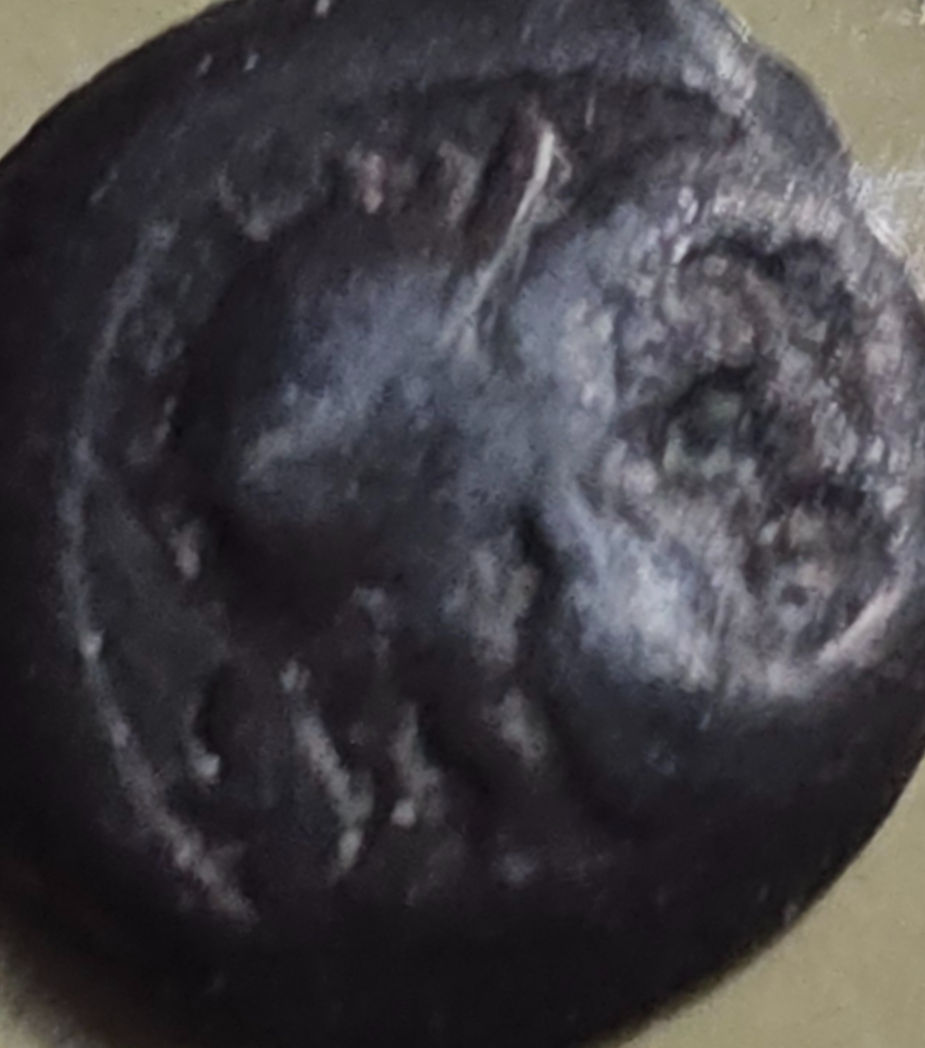

Egypt - Ptolomy VIII Euergetes II
Ptolemy VIII Euergetes II, nicknamed Physcon ("Fatty"), was born around 184 BC as the younger son of Ptolemy V and Cleopatra I . He grew up in a dynastic environment shaped by recent military setbacks, including Egypt’s defeat in the Fifth Syrian War against the Seleucid king Antiochus III, which reduced Egypt’s influence in the Near East. As a teenager, he was elevated to co-regent with his elder brother Ptolemy VI and sister Cleopatra II in 170 BC, a move intended to present a united front during the Sixth Syrian War ancient-history-sites.com.
Reign and Political Conflicts
Ptolemy VIII’s reign was characterized by intense rivalry with his siblings. After Ptolemy VI was captured during the war, Ptolemy VIII briefly became sole ruler of Egypt. Following his brother’s restoration in 168 BC, the two continued to quarrel, with Ptolemy VIII eventually being expelled and ruling Cyrene (modern Libya) from 163 to 145 BC . He repeatedly attempted to seize Cyprus and consolidate power, often relying on Roman support Encyclopedia Britannica.
After Ptolemy VI’s death in 145 BC, Ptolemy VIII returned to Egypt as co-ruler with Cleopatra II. His later marriage to his niece Cleopatra III and promotion of her as co-regent sparked a civil war from 132/1 to 127/6 BC, dividing Egypt between Alexandria, controlled by Cleopatra II, and the rest of the country, controlled by Ptolemy VIII and Cleopatra III . . During this conflict, native Egyptians were elevated to high government positions for the first time, reflecting a strategic adaptation to local politics .
Ptolemy VIII was known for his cruelty and political shrewdness, with ancient Greek sources portraying him as degenerate and fat in contrast to his brother Ptolemy VI. Despite this, he implemented significant administrative reforms late in his reign, including measures to stabilize the economy and promote Egypt’s trade, such as sponsoring the first sea voyage to India via the Red Sea around 117 BC . His reign left a mixed legacy of brutality, political cunning, and cultural patronage, influencing the trajectory of the Ptolemaic dynasty until its eventual decline .Cultural and ReligiousAs pharaoh, Ptolemy V RoleIII adopted traditional Egyptian royal titles and rituals, linking himself to gods such as Horus, Ra, and Ptah, and participating in sacred ceremonies like the Sed festival pharaoh.se. His reign exemplified the blend of Hellenistic and Egyptian traditions, balancing Macedonian dynastic interests with local religious and political structures .
Ptolemy VIII died in 116 BC, leaving Egypt under the joint rule ofncient-history-sites.com+ Cleopatra II and Cleopatra III, and his reign remains a notable example of the complex interplay of family, politics, and diplomacy.
