

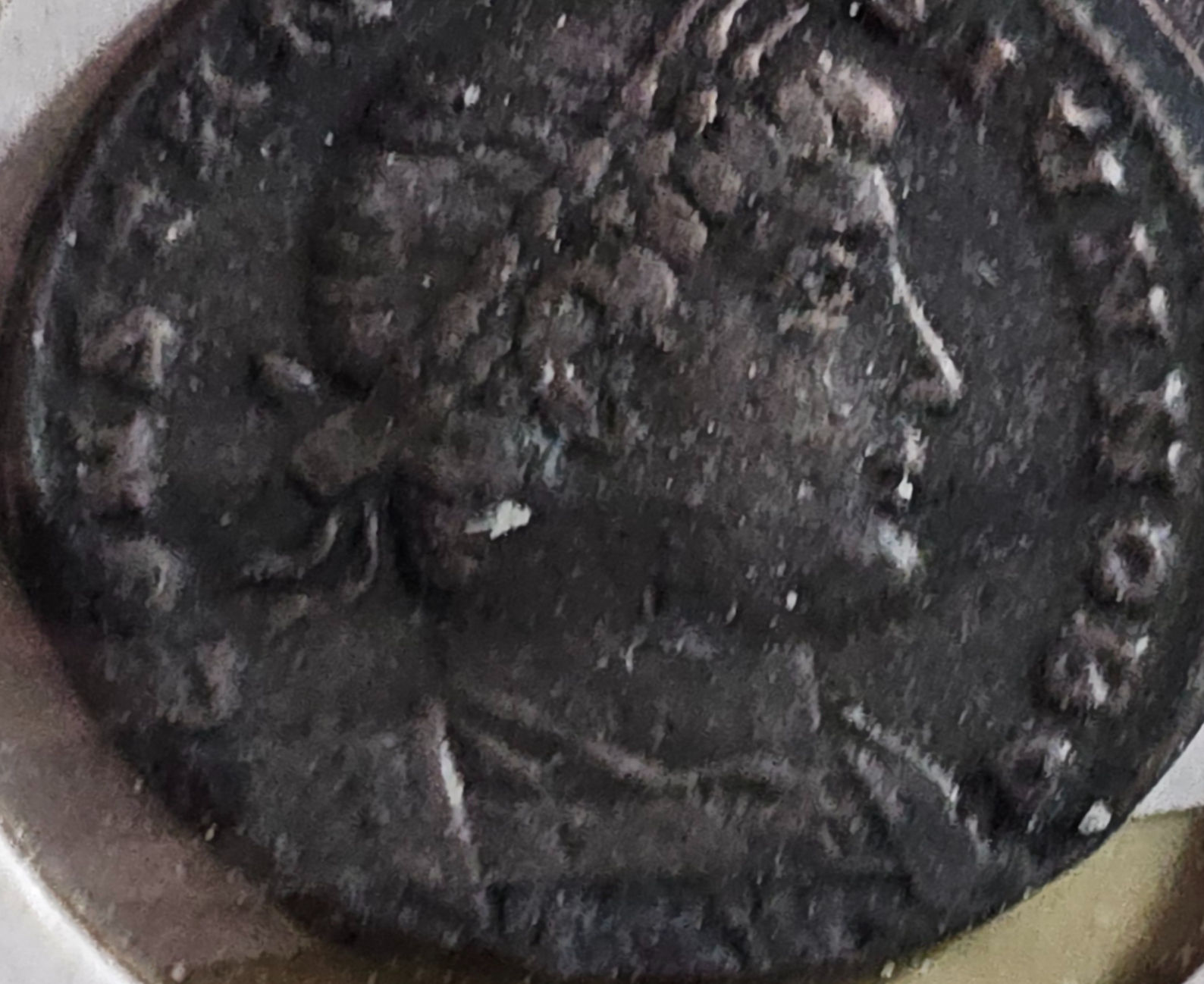

Roman Era - Constantine II
Constantine II (Latin: Flavius Claudius Constantinus; 316–340) was Roman emperor from 337 to 340. He was the second son of Emperor Constantine I and the eldest son of his second wife, Flavia Maxima Fausta. He was proclaimed Caesar by his father shortly after his birth. He was associated with military victories over the Sarmatians, Alamanni and Goths during his career, for which he was granted a number of victory titles. He held the consulship four times – in 320, 321, 324, and 329.
Constantine I had arranged for his sons to share power with their cousins Dalmatius and Hannibalianus, but Constantine II and his brothers did not accept this arrangement. As a result, after their father's death Constantine II's brother Constantius II ordered the killings of numerous male relatives, including Dalmatius and Hannibalianus, thus eliminating any possible opponents to the succession of Constantine I's sons. Constantine then ascended to the throne alongside his two younger brothers, ruling Gaul, Hispania, and Britain. However, his belief in his rights of primogeniture and attempts to exert them over his youngest brother, Constans, caused conflict, which ended with his death in a failed invasion of Italy in 340. Constans subsequently took control of Constantine's territories, with the latter being subjected to damnatio memoriae.
In April 340,[45] Constantine launched an invasion into Italy to claim territory from Constans.[17][33] Constans, at that time in Naissus,[38] sent a number of troops to confront him, and Constantine was killed in an ambush near Aquileia.[33][46][e] Constans then took control of his brother's realm, whose inhabitants seem to have been largely unaffected by their change in ruler.[50]
After his death, Constantine was subjected to damnatio memoriae.Constans issued legislation repealing Constantine's acts shortly after his death, where the deceased emperor was branded as "the public enemy and our own enemy." Years later, when Libanius delivered a panegyric for both Constans and Constantius, Constantine was completely omitted from the narrative, as if he had never existed.
